
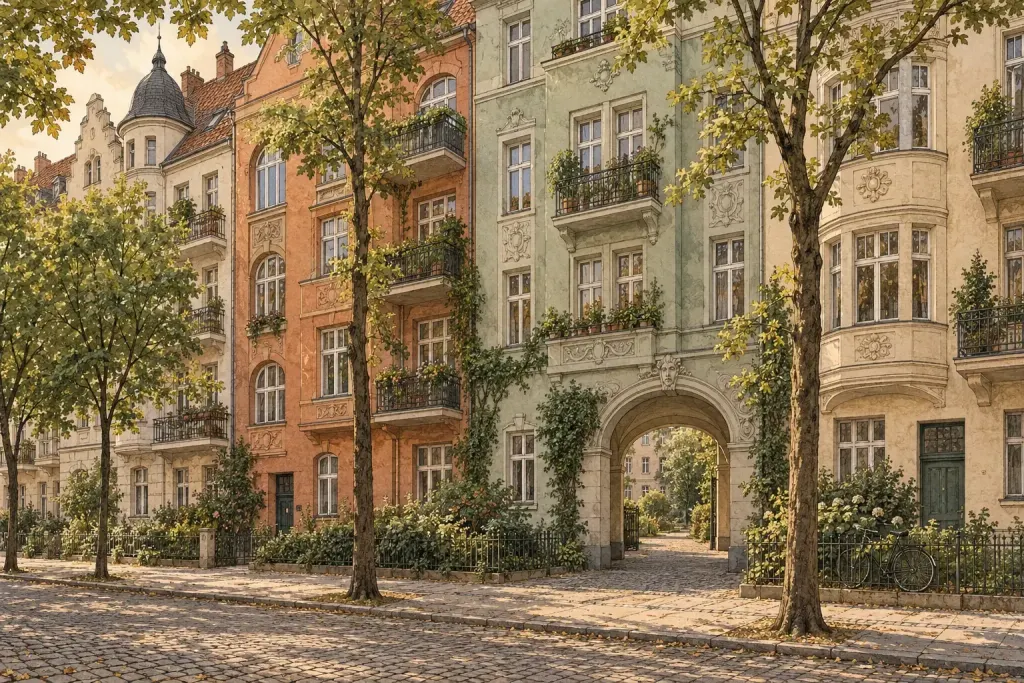
Two Berlin apartments can share a borough name and offer very different daily routines. One may face a busy street; another may open onto a courtyard. The useful question is not simply which borough is “best,” but which address fits the journeys and surroundings you will actually use.
visitBerlin’s neighbourhood guide introduces the city through its twelve boroughs and local neighbourhoods, often called Kieze. Its overview points to varied urban settings: cultural centres, residential streets, waterways and green landscapes. It is an orientation resource, not a current rental survey or a promise about a particular building.
Use three levels of location
The borough gives you a broad place on the map. The neighbourhood helps you investigate the immediate surroundings. The building and unit determine details that neither label can supply, including the entrance, stairs, window orientation and internal layout.
Keep those levels separate in your notes. If a neighbourhood appeals to you because of a park, check the route from the actual property. If a listing mentions a courtyard, establish which rooms face it and what you can verify during a viewing. A feature elsewhere in the building is not necessarily a feature of the apartment.
Try a short comparison walk
For each address, plan a modest loop: the building entrance, the nearest useful transport stop, a food shop and one everyday destination of your own. This is an original research exercise, not a claim that every resident needs the same facilities.
Record observations with the time of your visit. “Delivery vehicles outside at 10 a.m.” is more useful than “always noisy.” If a question matters beyond what you observed, ask the landlord or agent for specific information and seek another visit where possible. Keep someone’s answer distinct from your own observation.
Do not let the neighbourhood replace the viewing
Inside the building, check the advertised floor against the entrance route and any lift information. Inside the unit, examine whether the room arrangement suits the furniture and activities you expect. Ask which fixtures belong to the offered apartment and which details in photographs might have changed.
Record the quoted rent components and outstanding contract questions without assuming that two headline amounts include the same things. This article does not supply price estimates or interpret local tenancy rules; those need current, property-specific information.
A practical location note might read: “The area suits my regular route, but the unit’s access and included fixtures still need confirmation.” That leaves room for Berlin’s neighbourhood character without letting it make the housing decision for you.